カテゴリー
AI サイエンス デジタル

炎上商法とその行く末

炎上商法とは


炎上商法とは、過激な言動や行動、扇情的な広告などによって、意図的に世間の批判や反感を買うことで注目を集め、知名度や売り上げを向上させようとするマーケティング手法です。

炎上商法のメリット

  • 低コストで短期間に大きな注目を集めることができる
  • 既存の顧客層だけでなく、新たな顧客層を獲得できる可能性がある
  • 話題性が高まることで、メディアに取り上げられやすくなる

炎上商法のデメリット

  • 企業やブランドのイメージが大きく損なわれるリスクがある
  • 一時的な注目を集めることはできても、長期的な信頼関係を築くことは難しい
  • 炎上が制御不能になり、社会的な問題に発展する可能性がある
  • 法律や倫理に抵触する行為は、法的責任を問われる可能性がある

炎上商法の事例

  • 芸能人やインフルエンサーによる過激な発言や行動
  • 企業による不適切な広告やプロモーション
  • 政治家や団体による扇情的な発言や活動

炎上商法に関する注意点

炎上商法は、短期的には効果があるかもしれませんが、長期的に見ると企業やブランドにとって大きなリスクを伴う手法です。炎上商法を行う際は、そのリスクを十分に理解し、慎重に検討する必要があります。また、炎上商法が社会的に許容される範囲を超えないように、倫理的な観点からも注意が必要です。

炎上商法で有名になった人は数多くいますが、ここではその一部を紹介します。

  • ローガン・ポール

アメリカのYouTuber。2017年に日本の青木ヶ原樹海で自殺者の遺体を撮影した動画を投稿し、世界的な批判を浴びた。

  • ピューディパイ

スウェーデンのYouTuber。過去に人種差別的な発言や行動を繰り返し、炎上を繰り返している。

  • ドナルド・トランプ

アメリカ合衆国第45代大統領。過激な発言や政策で常に物議を醸し、支持者と反対派を二分している。

【企業やブランド】

  • DHC

化粧品会社。2020年に、競合他社や在日コリアンに対する差別的な文章を公式ウェブサイトに掲載し、大炎上した。

  • はれのひ

振り袖のレンタル・販売業者。2018年の成人式当日に突然店を閉鎖し、多くの新成人が晴れ着を着られなくなる事態を引き起こした。

これらの例からもわかるように、炎上商法は一時的な注目を集めることはできますが、長期的な信頼を失うリスクも高いです。

炎上商法によって一時的に知名度を上げた日本のインフルエンサーはいますが、「成功」の定義によって評価は分かれます。

短期的な注目度や話題性という点では、

  • シバター

過激な言動や炎上を繰り返すYouTuber。

  • コレコレ

暴露系配信で知られるYouTuber。

  • ガーシー

暴露系配信で政治家となり、その後除名された元参議院議員。

彼らはいずれも炎上商法的な手法で注目を集め、一定の成功を収めたと言えるかもしれません。しかし、長期的な信頼やイメージの構築という点では疑問が残ります。

一方で、炎上商法とは異なる手法で着実にファンを獲得し、成功しているインフルエンサーも多数存在します。

  • HIKAKIN

日本のトップYouTuber。

  • はじめしゃちょー

実験系動画で人気を集めるYouTuber。

  • フワちゃん

自由奔放なキャラクターでバラエティ番組でも活躍するタレント。

彼らは炎上とは無縁でありながらも、多くの人々に支持されています。

「炎上商法で成功した」と言えるかどうかは、成功の定義によって異なりますが、長期的な視点で見た場合、炎上商法は必ずしも成功とは言えない可能性が高いです。

What is Flame Marketing?

Flame marketing is a marketing technique that aims to increase public recognition and sales by intentionally attracting public criticism and resentment through radical words and actions, sensational advertising, etc.

Advantages of Flame Marketing

Can attract a lot of attention in a short period of time at low cost

Possibility of acquiring new customers in addition to existing customers

Increased topicality makes it easier for the media to cover it

Disadvantages of Flame Marketing

There is a risk that the image of the company or brand will be significantly damaged

Even if it can attract temporary attention, it is difficult to build a long-term relationship of trust

The flame can get out of control and develop into a social problem

Actions that violate laws and ethics may result in legal liability

Examples of Flame Marketing

Extreme statements and actions by celebrities and influencers

Inappropriate advertising and promotions by companies

Sensational statements and activities by politicians and organizations

Points to note about Flame Marketing

Flame marketing may be effective in the short term, but it is a method that poses great risks to companies and brands in the long term. When engaging in flame marketing, it is necessary to fully understand the risks and consider them carefully. In addition, care must be taken from an ethical point of view to ensure that flame marketing does not exceed the limits of social acceptability.

There are many people who have become famous through flame marketing, but here are some of them.

Logan Paul

American YouTuber. In 2017, he posted a video of a suicide victim’s body in Aokigahara Jukai in Japan, which drew worldwide criticism.

PewDiePie

Swedish YouTuber. He has repeatedly made racist remarks and actions in the past, causing repeated flame wars.

Donald Trump

The 45th President of the United States. His radical remarks and policies have always caused controversy, dividing supporters and opponents.

[Companies and brands]

DHC

A cosmetics company. In 2020, it posted discriminatory text against competitors and Korean residents in Japan on its official website, causing a major uproar.

Hare no Hi

A rental and sales company for furisode. In 2018, the store suddenly closed on the day of the Coming of Age Ceremony, leaving many new adults unable to wear their formal attire.

As these examples show, while flame marketing can attract temporary attention, it also carries a high risk of losing long-term trust.

There are Japanese influencers who have temporarily gained fame through flame marketing, but their evaluations vary depending on the definition of “success.”

In terms of short-term attention and buzz,

Shibata

A YouTuber who repeatedly makes extreme statements and causes flames.

Korekore

A YouTuber known for his expose-type broadcasts.

Garcy

A former member of the House of Councilors who became a politician through expose-type broadcasts and was later expelled.

It can be said that all of them attracted attention using flame marketing techniques and achieved a certain degree of success. However, questions remain regarding their long-term trust and image building.

On the other hand, there are many influencers who have been successful by steadily gaining fans using methods other than flame marketing.

HIKAKIN

A top YouTuber in Japan.

Hajime Shacho

A popular YouTuber with experimental videos.

Fuwa-chan

A free-spirited personality and a talent who is active in variety shows.

They have no connection to flame wars, yet are supported by many people.

Whether or not you can say that flame war marketing has been successful depends on your definition of success, but from a long-term perspective, it is highly unlikely that flame war marketing can necessarily be called successful.

 

mark 3p1000

カテゴリー
サイエンス デジタル 広告 情報

ひまそらあかね 東京都知事選

【YOUTUBE 2つ抜粋】


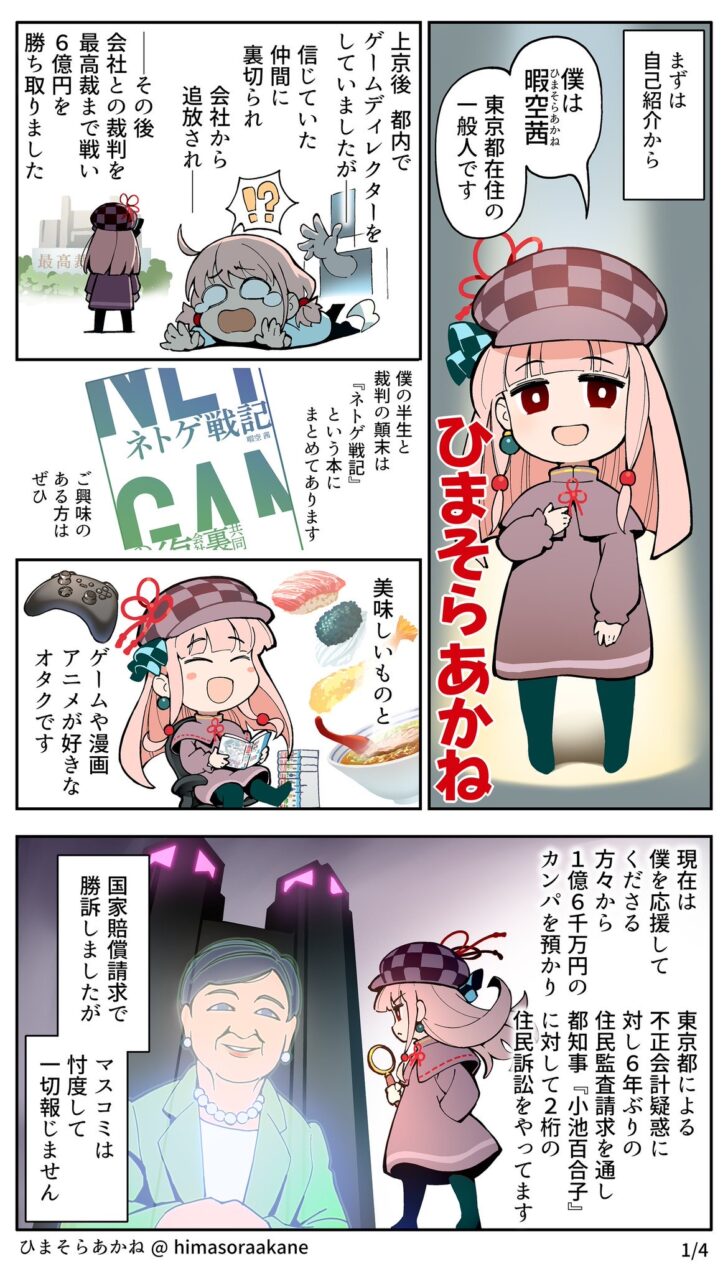
【出馬漫画】

IMG 3595
IMG 3596
IMG 3597

IMG 3598


リンク先:ひまそらあかね X

【公約】

①公金チューチューをなくす

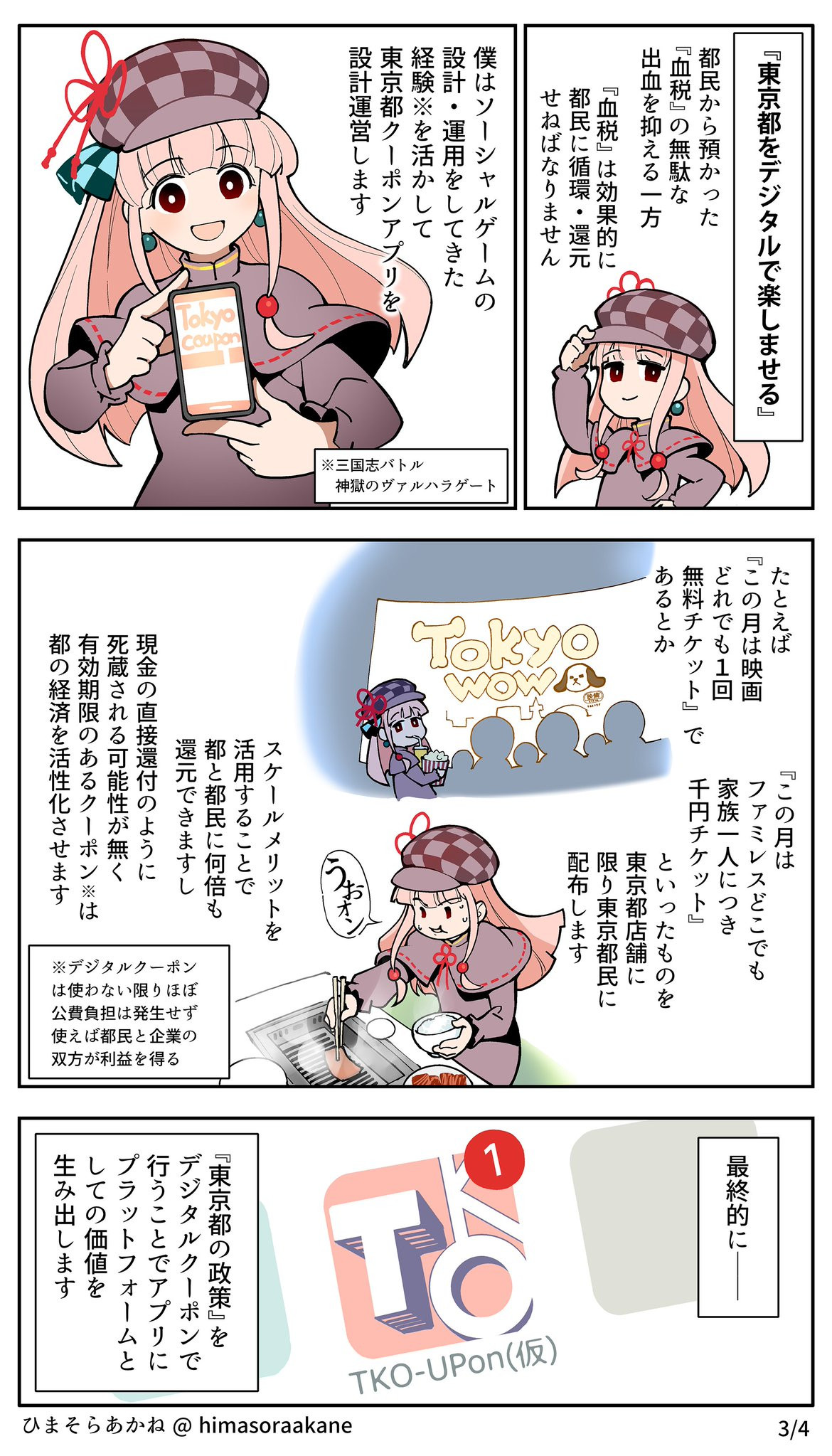
②東京都をデジタルで楽しませる

③政治献金の一切を受け取りません。

個人献金、企業献金、政治資金パーティの全て0


面白くなってきた、公約もわかりやすい。

今までの動画もXも見てきた。非常に面白い!!

久しぶりにワクワクする。エセ保守の動向も見もの。


[Pledges]

① Eliminate public money sucking

② Make Tokyo digitally entertaining

③ We will not accept any political donations.

No personal donations, no corporate donations, no political fundraising parties

It’s getting interesting, the pledges are easy to understand.

I’ve seen all the previous videos and X. Very interesting!!

It’s been a while since I’ve felt so excited. The movements of the pseudo-conservatives are also interesting to watch.


【東京都知事選】暇空茜(ひまそらあかね)

電撃出馬の波紋!【デイリーWiLL】

ここは取り上げていた!!

カテゴリー
AI サイエンス デジタル 広告

投資会社~ブラックロック~

ブラックロック

1988年にニューヨークで8人のパートナーによって設立されました。当初は債券運用に注力していましたが、その後、株式、不動産、オルタナティブ投資など、多岐にわたる資産クラスを運用する世界最大の資産運用会社へと成長しました。

ブラックロックの歴史をいくつかの時代に分けて見てみましょう。

1988~1994年:創業期

  • 1988年: ブラックロック設立。債券運用に特化し、リスク管理を重視した投資戦略で顧客を獲得。
  • 1992年: テクノロジー・プラットフォームAladdin®の開発を開始。Aladdin®は、後にブラックロックの資産運用の中核となるシステムへと発展。

1995~2004年:多角化への歩み

  • 1995年: 株式を含むオープン・エンド型ファンドの運用を開始し、ビジネスを多角化。
  • 1999年: ニューヨーク証券取引所に上場。
  • 2004年末: 運用資産残高は3,420億ドルに増加。

2005年~現在:グローバル展開と成長

  • 2006年: メリルリンチ投資顧問部門を買収し、運用資産残高が1兆ドルを突破。
  • 2009年: バークレイズ・グローバル・インベスターズを買収し、世界最大の資産運用会社となる。
  • 2023年末: 運用資産残高は約9兆ドルに達する。

ブラックロックは、Aladdin®の開発、iShares® ETFの提供、ESG投資への注力など、常に業界をリードする存在であり続けています。

詳細な歴史については、ブラックロックのウェブサイトをご参照ください。

ご不明な点がございましたら、お気軽にお問い合わせください。

ブラックロックは資産運用会社なので、世界中の様々な企業の株主になっています。ブラックロック自身が上場企業(NYSE: BLK)であり、その株主は主に機関投資家や個人投資家で構成されています。

ブラックロックの株主構成について、以下の情報源をご参照ください。

  • Fintel: BLK – ブラックロック株式会社 株式 – 株価、機関投資家所有、株主 (NYSE) – Fintel: https://fintel.io/ja/so/us/blk

このページでは、ブラックロックの主要株主(機関投資家やファンド)を確認できます。

また、ブラックロックの子会社であるブラックロック・ジャパンは、日本の株式市場で多くの企業の株を保有しています。以下の情報源で、ブラックロック・ジャパンが保有する銘柄一覧を確認できます。

これらの情報源をご活用いただき、ブラックロックがどの企業の株主になっているか、詳しく調べてみてください。

ブラックロックは、米国で非常に多くの企業の株主であり、その中には名だたる大企業も含まれます。以下に、ブラックロックが主要な株主として名を連ねている代表的な企業をいくつか挙げます。

テクノロジー企業:

  • Apple
  • Microsoft
  • Amazon
  • Alphabet (Google)
  • Meta (Facebook)
  • Nvidia

金融企業:

  • JPMorgan Chase
  • Bank of America
  • Wells Fargo
  • Visa
  • Mastercard

その他:

  • Johnson & Johnson
  • Procter & Gamble
  • Berkshire Hathaway
  • Exxon Mobil
  • UnitedHealth Group

これらはほんの一例であり、ブラックロックはこれ以外にも非常に多くの企業の株主となっています。

ブラックロックが保有する株式の詳細は、以下の情報源で確認できます。

  • ブラックロックのウェブサイト: 特に、サステナビリティレポートや議決権行使報告書などをご参照ください。
  • SEC(米国証券取引委員会)への提出書類: Form 13Fと呼ばれる報告書で、ブラックロックの保有株式の詳細が確認できます。
  • 金融情報サービス: Bloomberg、FactSet、Refinitivなどのサービスで、ブラックロックの保有株式に関する情報が提供されています。

これらの情報源をご活用いただき、ブラックロックが米国でどの企業の株主になっているか、詳しく調べてみてください。

BlackRock was founded in New York in 1988 by eight partners. Initially focused on bond management, the company has since grown into the world’s largest asset management company, managing a wide range of asset classes, including stocks, real estate, and alternative investments.

Let’s look at BlackRock’s history in several periods.

1988-1994: Founding period

1988: BlackRock is founded. It specializes in bond management and attracts clients with an investment strategy that emphasizes risk management.

1992: Development of the technology platform Aladdin® begins. Aladdin® later develops into the core system for BlackRock’s asset management.

1995-2004: Diversification

1995: The company diversifies its business by starting to manage open-end funds, including stocks.

1999: The company is listed on the New York Stock Exchange.

End of 2004: Assets under management increase to $342 billion.

2005-present: Global expansion and growth

2006: Acquires Merrill Lynch Investment Advisory Division, exceeding $1 trillion in assets under management.

2009: Acquires Barclays Global Investors, becoming the world’s largest asset management company.

End of 2023: AUM will reach approximately $9 trillion.

BlackRock has always been a leader in the industry, developing Aladdin®, offering iShares® ETFs, and focusing on ESG investing.

For a detailed history, please visit BlackRock’s website.

BlackRock History | Company Information – BlackRock: https://www.blackrock.com/jp/individual/ja/about-us/blackrock-history

If you have any questions, please feel free to contact us.

Because BlackRock is an asset management company, it is a shareholder of various companies around the world. BlackRock itself is a publicly traded company (NYSE: BLK), and its shareholders are mainly institutional and individual investors.

Please refer to the following sources for information on the shareholder structure of BlackRock.

Fintel: BLK – BlackRock Inc. Stock – Stock Price, Institutional Ownership, Shareholders (NYSE) – Fintel: https://fintel.io/ja/so/us/blk

On this page, you can check the major shareholders of BlackRock (institutional investors and funds).

In addition, BlackRock’s subsidiary BlackRock Japan holds shares in many companies on the Japanese stock market. You can check the list of stocks held by BlackRock Japan in the following sources.

Buffett Code: List of stocks held by BlackRock Japan and their valuation | Buffett Code: https://www.buffett-code.com/shareholder/1be4d497f22f2ef012d83b034ec014d2

Please use these sources to find out more about which companies BlackRock holds as a shareholder.

BlackRock holds a large number of companies in the United States, including some of the most well-known large companies. Here are some of the major companies where BlackRock is a major shareholder:

Tech companies:

Apple
Microsoft
Amazon
Alphabet (Google)
Meta (Facebook)
Nvidia

Financial companies:

JPMorgan Chase
Bank of America
Wells Fargo
Visa
Mastercard

Other:

Johnson & Johnson
Procter & Gamble
Berkshire Hathaway
Exxon Mobil
UnitedHealth Group

These are just a few examples of companies where BlackRock is a shareholder.

You can find more information about BlackRock’s holdings in the following sources:

BlackRock’s website: Please refer to the sustainability report and proxy statement, among others.

SEC filings: The SEC filing, Form 13F, provides details about BlackRock’s holdings.

Financial information services: Services such as Bloomberg, FactSet, and Refinitiv provide information about BlackRock’s holdings.

Use these sources to find out more about which companies BlackRock owns in the US.


mark 3p1000


カテゴリー
AI サイエンス デジタル 心理学・性格・傾向 情報 歴史

ポジションで意見が変わる 被害と加害~ファンとアンチと~

ポジショントーク


「基本的には被害者の味方・ファンの味方がポジションです」

特に未成年には。

ただし、ポジショントークがあることは悪ではない。

見極めを大切に!!

では下記に記載します。


1. 利害関係:

  • 組織内での立場: 部署や役職によって、重視する目標やKPIが異なるため、同じ事象に対しても異なる意見を持つことがあります。
  • 業界や市場での立場: 競合他社との関係や、自社の市場シェアなどによって、意見が変わる場合があります。
  • 個人的な利害: 昇進や報酬など、個人的な利益に関わる事柄について、意見が変わる可能性があります。

2. 責任範囲:

  • 意思決定権: 決定権を持つ立場の人と、実行する立場の人では、責任の重さが異なるため、意見が分かれることがあります。
  • 影響範囲: 自分だけの問題ではなく、チームや組織全体に影響が及ぶ問題について、より慎重な意見を持つ人がいる一方で、リスクを恐れずに大胆な意見を持つ人もいます。

3. 情報量と視点:

  • アクセスできる情報: 同じ事象でも、入手できる情報量や質によって、意見が変わることがあります。
  • 専門知識や経験: 専門分野や過去の経験によって、着目するポイントや解釈が異なるため、意見が分かれる場合があります。

4. 価値観や信念:

  • 倫理観: 正義や道徳に関する価値観の違いによって、意見が対立することがあります。
  • 組織文化: 組織内で共有されている価値観や規範によって、意見が影響を受けることがあります。
  • 個人的な信念: 個人の信条や思想によって、意見が左右される場合があります。

5. コミュニケーション:

  • 表現方法: 同じ意見でも、表現方法によって相手に与える印象が異なるため、誤解が生じたり、意見が対立したりすることがあります。
  • 相互理解: 相手の立場や意見を理解しようと努めることで、意見の食い違いを解消できる場合があります。

これらの要素は、複雑に絡み合いながら、個人の意見形成に影響を与えます。ポジションによって意見が変わることは、必ずしも悪いことではありません。多様な意見を交換し、議論を深めることで、より良い意思決定や問題解決に繋がる可能性があります。

被害者と加害者

日本での問題点

日本では、被害者と加害者の問題について、以下のような様々な問題点が指摘されています。

被害者

  • 二次被害: 被害者が事件後、心ない言葉や偏見にさらされ、精神的な苦痛を受ける二次被害の問題は深刻です。特に性犯罪などの場合、被害者が非難されたり、プライバシーを侵害されたりすることがあります。
  • 支援体制の不足: 被害者支援の体制が十分でないという指摘があります。経済的な支援や心のケアなど、必要なサポートを受けられない被害者がいるのが現状です。
  • 捜査・裁判への負担: 被害者が捜査や裁判に協力する際に、精神的な負担が大きいという問題があります。プライバシーの保護や配慮が不十分な場合もあります。

加害者

  • 更生支援の不足: 加害者の更生を支援する体制が十分でなく、再犯防止に課題があります。刑務所を出所した後、社会復帰が困難なケースも多く、孤立してしまう加害者もいます。
  • 加害者家族への偏見: 加害者の家族が、事件と無関係であるにも関わらず、偏見や差別を受けることがあります。
  • 社会的制裁: インターネット上での誹謗中傷など、加害者やその家族に対する社会的制裁が過剰になる場合があります。

その他

  • メディア報道: メディアによる報道が、被害者のプライバシーを侵害したり、加害者を過度に非難したりするなど、問題視されることがあります。
  • 性犯罪に関する誤解: 性犯罪の加害者像や被害者像について、誤った認識が広まっていることがあります。
  • 少年犯罪: 少年犯罪の低年齢化や凶悪化が問題視されており、少年法の改正などをめぐって議論が続いています。

これらの問題点を解決するために、被害者支援の充実、加害者の更生支援の強化、メディア報道のあり方の改善、性犯罪に関する正しい知識の普及、少年犯罪対策の強化など、様々な取り組みが必要とされています。

ファンとアンチは、ある対象(人物、作品、団体など)に対して、それぞれ強い好意と嫌悪を抱く人々のことを指します。

ファンの特徴

  • 対象への熱烈な愛情や支持を示す
  • 対象に関する情報を積極的に収集し、共有する
  • 対象を応援し、成功を願う
  • 同じ対象のファン同士でコミュニティを形成し、交流する
  • 対象への批判に対して反論したり、擁護したりする

アンチの特徴

  • 対象への強い嫌悪感や批判を示す
  • 対象に関するネガティブな情報を収集し、拡散する
  • 対象の失敗を願ったり、嘲笑したりする
  • 同じ対象のアンチ同士でコミュニティを形成し、共感したり、情報を共有したりする
  • 対象への肯定的な意見に対して反論したり、否定したりする

ファンとアンチの問題点

  • ファンとアンチの対立が激化すると、誹謗中傷や炎上などの問題に発展することがある
  • 過度なファン活動が、対象のプライバシーを侵害したり、迷惑行為につながったりすることがある
  • アンチによる誹謗中傷やデマが、対象の精神的な苦痛や名誉毀損につながることがある
  • ファンとアンチの対立が、社会的な分断を助長することがある

ファンとアンチの向き合い方

  • ファンは、対象への愛情を表現する際に、他者への配慮を忘れないようにする
  • アンチは、対象への批判を表明する際に、誹謗中傷やデマにならないように注意する
  • ファンとアンチは、互いの意見を尊重し、建設的な対話をするように心がける
  • 関係者は、ファンとアンチの対立が激化しないように、適切な対応をする

ファンとアンチは、どちらも対象への強い関心を示す存在であり、その存在自体を否定することはできません。しかし、互いの意見を尊重し、建設的な関係を築くことが重要です。

position talk


“Basically, my position is to be on the side of the victim and the fans.”

Especially for minors.

However, having position talk is not a bad thing.

Take care to discern! !

I will describe it below.


1. Conflict of interest:

Position within the organization: Depending on the department or position, the goals and KPIs that are emphasized differ, so people may have different opinions on the same issue.
Industry and market position: Opinions may change based on factors such as your relationship with competitors and your company’s market share.
Personal Interests: You may change your mind about matters that concern your personal interests, such as promotions or compensation.

2. Scope of responsibility:

Decision-making authority: Opinions may differ between those in a position to make decisions and those in a position to implement them, as they have different levels of responsibility.
Reach: Some people are more cautious about issues that affect their team or organization as a whole, while others are more risk-taking and bold.

3. Information amount and perspective:

Accessible information: Opinions about the same event can change depending on the amount and quality of information available.
Expertise and experience: Depending on your field of expertise and past experience, points of focus and interpretation may differ, so opinions may differ.

4. Values and beliefs:

Ethics: Differences in values regarding justice and morality can lead to conflicting opinions.
Organizational Culture: Opinions can be influenced by the values and norms shared within an organization.
Personal Beliefs: Opinions may be influenced by personal beliefs and ideology.

5. Communication:

How to express: Even if you have the same opinion, the way you express it gives different impressions to others, which can lead to misunderstandings and conflicting opinions.
Mutual understanding: Sometimes disagreements can be resolved by trying to understand the other person’s position and opinions.

These factors are intricately intertwined and influence an individual’s opinion formation. It’s not necessarily a bad thing to have different opinions depending on your position. Exchanging diverse opinions and deepening discussions can lead to better decision-making and problem-solving.


victim and perpetrator
Problems in Japan


In Japan, various issues have been pointed out regarding the issue of victims and perpetrators, including the following:

victim

Secondary victimization: The problem of secondary victimization is a serious one, as victims are exposed to heartless words and prejudice after the incident, causing mental pain. Particularly in cases such as sexual crimes, victims may be blamed and their privacy violated.
Lack of support system: It has been pointed out that the support system for victims is insufficient. The current situation is that some victims are unable to receive the support they need, such as financial support and psychological care.
Burden on investigations and trials: There is a problem in that victims face a heavy psychological burden when cooperating with investigations and trials. In some cases, privacy protection and consideration may not be sufficient.

Perpetrator

Lack of rehabilitation support: There is an insufficient system to support the rehabilitation of offenders, and there are challenges in preventing recidivism. After being released from prison, there are many cases where it is difficult to reintegrate into society, and some perpetrators end up isolated.
Prejudice against the perpetrator’s family: The perpetrator’s family may be subject to prejudice and discrimination even though they have nothing to do with the incident.
Social sanctions: Social sanctions against perpetrators and their families, such as online slander, can be excessive.

others

Media coverage: Media coverage can sometimes be viewed as problematic, such as invading the privacy of victims or overly blaming perpetrators.
Misconceptions about sexual crimes: There are widespread misconceptions about the perpetrators and victims of sexual crimes.
Juvenile delinquency: The younger age and more violent nature of juvenile delinquency has been seen as a problem, and debate continues over revisions to the Juvenile Law.

In order to solve these problems, various initiatives are being taken, such as enhancing victim support, strengthening rehabilitation support for perpetrators, improving media coverage, disseminating correct knowledge about sexual crimes, and strengthening measures against juvenile crimes. It is needed.

Fans and anti-fans refer to people who have strong feelings of liking or disliking towards a certain object (person, work, organization, etc.).

Fan characteristics

show passionate love or support for a target
Actively collect and share information about the subject
Support the target and wish for success
Form a community and interact with fans of the same target
refute or defend a subject against criticism

Characteristics of anti

Show strong dislike or criticism towards a target
Collect and spread negative information about the target
Wishing the target failure or ridiculing it
Form a community with antis who share the same target, sympathize with each other, and share information.
refute or deny a positive opinion about a subject

Problems between fans and antis

When the conflict between fans and anti-fans intensifies, it can lead to problems such as slander and flames.
Excessive fan activity may violate the privacy of the target or lead to nuisance.
Slander and false rumors by anti-people can lead to mental pain and defamation of the target.
Conflict between fans and anti-fans can exacerbate social divisions.

How to deal with fans and antis

Fans should remember to be considerate of others when expressing their love for the subject.
Antis should be careful not to use slander or false rumors when expressing criticism of a target.
Fans and antis should respect each other’s opinions and try to have constructive dialogue.
Those involved will take appropriate measures to prevent conflicts between fans and anti-fans from escalating.

Fans and antis are both entities that show a strong interest in the subject, and their existence cannot be denied. However, it is important to respect each other’s opinions and build a constructive relationship.


mark 3p1000


カテゴリー
AI デジタル 心理学・性格・傾向 思い出 情報

捉え方を変える~過去と未来について考えを変える~

捉え方を変える

特に過去と未来について考えを変えるためには、

いくつかのステップを踏むことが有効です。

1. 過去の出来事を受け入れる

過去の出来事は変えられません。後悔や罪悪感にとらわれすぎると、前に進むことを妨げてしまいます。まずは、過去の出来事をありのままに受け入れることから始めましょう。

2. 過去から学ぶ

過去の経験は、貴重な学びの機会です。何がうまくいき、何がうまくいかなかったのかを振り返り、教訓を引き出すことで、未来の選択に活かすことができます。

3. 過去にとらわれない→下記に追記

過去の出来事に縛られすぎると、未来の可能性を狭めてしまいます。過去の経験から学びつつも、過去にとらわれず、未来に目を向けることが大切です。

4. 未来へのビジョンを持つ

どのような未来を望むのか、具体的なビジョンを持つことは、目標設定や行動計画に役立ちます。未来への希望を持つことで、前向きな気持ちで日々を過ごすことができます。

5. 柔軟な思考を持つ

物事の捉え方は一つではありません。状況や視点を変えることで、新たな可能性が見えてくることがあります。固定観念にとらわれず、柔軟な思考を持つことが大切です。

6. ポジティブな言葉を使う

言葉は思考や感情に影響を与えます。ネガティブな言葉ではなく、ポジティブな言葉を使うことで、前向きな気持ちになり、行動にも良い影響を与えます。

7. 周囲のサポートを受ける

一人で考えを変えることは難しい場合もあります。家族や友人、専門家など、信頼できる人に相談することで、新たな視点や解決策が見つかることがあります。

これらのステップを踏むことで、過去と未来に対する考え方を変えることができます。焦らず、少しずつ取り組んでいきましょう。

3. 過去にとらわれない箇所追記

過去にとらわれないためには、以下の考え方が重要です。

  1. 過去は変えられないという事実を受け入れる: 過去の出来事は、どんなに後悔しても変えることはできません。まずはこの事実を受け入れることから始めましょう。

→ここだけ一点!!


10代・20代・30代・40代で同じ出来事起こっても対応は違っている。(40代なのでここまでしか知らない。)

事実は変わらないが過去に起きた事実の認識と状況は今と違っているため、その時の結果に関する捉え方を変えると結果的には過去が変わる。これだけは間違いない、それが成長となる。その時はそうだった、そうした対応をしたけれど今なら先なら対応を変えることができる。その際に、今からでもやり直しが効くなら対象は違えど自分の変化が起こる。


  1. 過去から学ぶ: 過去の経験は、貴重な学びの機会です。何がうまくいき、何がうまくいかなかったのかを客観的に分析し、教訓として未来に活かしましょう。

  2. 過去にとらわれることは、未来の可能性を狭める: 過去の失敗や後悔にばかり目を向けていると、未来への希望や可能性を見失ってしまいます。過去は過去として受け止め、未来に目を向けることが大切です。

  3. 「今」に集中する: 過去にとらわれている間は、「今」を生きていません。「今」という瞬間に集中することで、過去の出来事から意識を離し、前向きな気持ちで未来に向かって進むことができます。

  4. 自分を許す: 過去の自分を責め続けることは、精神的な負担になります。過去の自分を許し、受け入れることで、心の重荷を下ろし、前に進むことができます。

  5. 感謝の気持ちを持つ: 過去の経験があったからこそ、今の自分があるという感謝の気持ちを持つことで、過去を肯定的に捉え、未来への希望を持つことができます。

  6. 未来へのビジョンを持つ: どのような未来を望むのか、具体的なビジョンを持つことは、目標設定や行動計画に役立ちます。未来への希望を持つことで、過去にとらわれずに前向きな気持ちで日々を過ごすことができます。

  7. 小さな一歩を踏み出す: 過去にとらわれず、未来に向かって進むためには、具体的な行動が必要です。どんな小さな一歩でも良いので、まずは行動を起こしてみましょう。

これらの考え方を意識することで、過去にとらわれずに、未来に向かって前向きに進んでいくことができるでしょう。

change the way you think

Especially to change your mind about the past and the future.

It helps to take several steps.

1. Accept what happened in the past

Past events cannot be changed. If you get too caught up in regret or guilt, it will prevent you from moving forward. Let’s start by accepting what happened in the past as it is.

2. Learn from the past

Past experiences are valuable learning opportunities. You can reflect on what worked and what didn’t and draw lessons to inform future choices.

3. Don’t get caught up in the past → Add below

Being too tied to past events limits future possibilities. While learning from past experiences, it is important to look to the future and not get bogged down in the past.

4. Have a vision for the future

Having a concrete vision of what kind of future you want will help you set goals and plan your actions. Having hope for the future allows you to spend each day with a positive mindset.

5. Have a flexible mindset

There is more than just one way to look at things. By changing your situation and perspective, new possibilities may emerge. It is important to think flexibly and not be bound by fixed ideas.

6. Use positive language

Words influence thoughts and emotions. By using positive words instead of negative words, you will feel positive and have a positive influence on your actions.

7. Get support from those around you

It can be difficult to change your mind alone. Talking to people you trust, such as family, friends, or experts, can help you find new perspectives and solutions.

By taking these steps, you can change the way you think about the past and the future. Don’t rush, just work on it little by little.

3. Addition of parts that are not tied to the past

In order not to get stuck in the past, the following ideas are important.

Accept the fact that you can’t change the past: No amount of regret can change what happened in the past. Let’s start by accepting this fact.

→ Only one thing here! !


Even if the same event happens to people in their teens, 20s, 30s, and 40s, they will respond differently. (I’m in my 40s, so I only know this much.)

Although the facts remain the same, the perception of the facts that happened in the past and the situation are different from the present, so changing the way you perceive the outcome at that time will ultimately change the past. There is no doubt about this, that is growth. That was the case at the time, and that’s how I responded, but I can change my response now. At that time, if I could start over now, I would be able to change myself, even if the target is different.


Learning from the past: Past experiences are valuable learning opportunities. Objectively analyze what went well and what didn’t, and use the lessons learned for the future.

Preoccupation with the past limits future possibilities: When we focus on past failures and regrets, we lose sight of the hopes and possibilities for the future. It is important to accept the past as the past and look to the future.

Focus on the Now: When you’re stuck in the past, you’re not living in the Now. By focusing on the “now” moment, you can take your mind off of past events and move toward the future with a positive mindset.

Forgive yourself: Continuing to blame yourself for your past can be mentally taxing. By forgiving and accepting your past self, you can shed the burden of your heart and move forward.

Have an attitude of gratitude: By having an attitude of gratitude that you are who you are today because of your past experiences, you can view the past in a positive light and have hope for the future.

Have a vision for the future: Having a concrete vision of what you want your future to look like will help you set goals and plan your actions. Having hope for the future allows you to live each day with a positive mindset and not get bogged down in the past.

Take small steps: To move beyond the past and move towards the future, you need concrete actions. Take action, no matter how small the step.

By being aware of these ways of thinking, you will be able to move forward positively toward the future without getting bogged down in the past.


mark 3p1000

カテゴリー
AI デジタル 広告 心理学・性格・傾向 情報

紡ぐとは~紡ぎと繋ぎの違い~

紡ぐとは~紡ぎと繋ぎの違い~

糸を紡ぐという言葉は、綿や繭などの繊維を撚り合わせて糸にすることを意味します。これは、古くから人類が行ってきた伝統的な手仕事であり、衣服や道具などの素材として重要な役割を果たしてきました。一方、繋ぐという言葉は、離れたものを結びつけることを意味します。これは、物理的なものを繋ぐだけでなく、人や物事の関係を繋ぐことも含まれます。

一見すると似ているように見える「紡ぐ」と「繋ぐ」という言葉ですが、実は微妙な違いがあります。

1. 対象の違い

  • 紡ぐ: 対象は繊維などの細長い素材です。
  • 繋ぐ: 対象は形や大きさが様々です。

具体的には、「糸を紡ぐ」、「言葉を紡ぐ」のように、繊維や音声を対象とするのが「紡ぐ」です。一方、「橋を架ける」、「関係を繋ぐ」のように、物理的なものや関係性を対象とするのが「繋ぐ」です。

2. 行為の違い

  • 紡ぐ: 繊維を撚り合わせるという、回転させる動きが伴います。
  • 繋ぐ: 結ぶ、張り渡す、接着するなど、様々な方法があります。

「紡ぐ」は、繊維を撚り合わせることで、新しい糸という素材を生み出す行為です。一方、「繋ぐ」は、元々存在していたものを結びつけることで、一体化したり、関係性を構築したりする行為です。

3. 結果の違い

  • 紡ぐ: 糸という新しいものが生まれます。
  • 繋ぐ: 繋がりが生まれ、一体化したり、関係性が構築されたりします。

「紡ぐ」の結果として、糸という新しい素材が誕生します。一方、「繋ぐ」の結果として、離れていたものが一体化したり、関係性が構築されたりします。

比喩表現としての「紡ぐ」

近年、「紡ぐ」という言葉は、比喩表現として使われることが増えています。例えば、「言葉を紡ぐ」、「物語を紡ぐ」のように、言葉や音、時間を繋ぎ合わせて、何かを生み出すことを指します。

この比喩表現において、「紡ぐ」という言葉が使われる理由は、以下の点が考えられます。

  • 繊維を撚り合わせて糸を作るという行為には、創造性や丁寧さ、繊細さが求められます。
  • 紡いだ糸は、衣服や道具など、様々な形に変化することができます。
  • 紡ぐという行為には、時間と労力が必要です。

これらの点が、言葉を紡いだり、物語を紡いだりする行為と共通していると考えられます。

言葉と繋ぎの深層にあるもの

「紡ぐ」と「繋ぐ」という言葉は、一見すると対照的な意味を持つように見えますが、実は深いところで繋がっていると言えるでしょう。

創造性

「紡ぐ」も「繋ぐ」も、何かを生み出すという創造性の側面を持っています。「紡ぐ」では、糸という新しい素材を生み出し、「繋ぐ」では、新たな関係性や一体性を生み出すことができます。

時間と労力

どちらの行為にも、時間と労力が必要です。「紡ぐ」には、繊維を丁寧に撚り合わせる時間と労力がかかります。「繋ぐ」には、適切な方法を選び、慎重に作業を進める時間と労力が必要です。

温かさ

「紡ぐ」と「繋ぐ」という言葉には、温かさを感じさせる側面があります。「紡ぐ」には、手作りの温かさや、丁寧に作り上げる愛情が感じられます。「繋ぐ」には、人との繋がりや、絆の温かさを感じられます。

まとめ

「紡ぐ」と「繋ぐ」という言葉は、それぞれ異なる意味を持ちながらも、創造性、時間と労力、温かさといった共通点を持つ奥深い言葉です。

ブログ記事を作成する際には、これらの言葉の奥深さに触れながら、読者が「紡ぐ」と「繋ぐ」という言葉について理解を深め、自分自身の言葉や表現に活かせるような内容にすることを心がけましょう。

記事を充実させるためのヒント

  • 上記で説明した「対象の違い」、「行為の違い」、「結果の違い」に加え、「比喩表現としての「紡ぐ」」や「言葉と繋ぎの深層にあるもの」など、より深い考察を盛り込む。
  • 具体的なエピソードや事例を交えて説明することで、記事をより読みやすく、理解しやすいものにする。
  • 読者参加型の企画を取り入れることで、読者とのエンゲージメントを高める。

What is spinning? Difference between spinning and splicing

The word spinning refers to twisting fibers such as cotton or cocoons together into thread. This is a traditional handiwork that has been performed by humans since ancient times, and has played an important role as a material for clothing and tools. On the other hand, the word “connect” means to connect things that are separate. This includes not only connecting physical things, but also connecting relationships between people and things.

The words “spinning” and “connecting” may seem similar at first glance, but there are actually subtle differences.

1. Difference in target
Spinning: The object is a long and thin material such as fiber.
Connect: Objects come in all shapes and sizes.

Specifically, “spinning” refers to fibers and sounds, as in “spinning threads” and “spinning words.” On the other hand, “connect” refers to physical things and relationships, such as “build a bridge” and “connect relationships.”

2. Differences in behavior
Spinning: involves twisting the fibers together, a rotating motion.
Tie: There are various methods such as tying, stringing, gluing, etc.

“Spinning” is the act of creating new materials called threads by twisting fibers together. On the other hand, “connecting” is the act of integrating things or building relationships by connecting things that originally existed.

3. Difference in results
Spinning: A new thing called thread is born.
Connect: Connections are created, unification, and relationships are built.

As a result of “spinning,” a new material called thread is born. On the other hand, as a result of “connecting”, things that were separated become integrated, and relationships are built.

“Spinning” as a figurative expression

In recent years, the word “spinning” has been increasingly used as a metaphorical expression. For example, it refers to creating something by connecting words, sounds, and time, such as “spinning words” or “spinning a story.”

The following are possible reasons why the word “spinning” is used in this metaphorical expression.

The act of twisting fibers together to make thread requires creativity, care, and delicacy.
Spun thread can be transformed into various forms such as clothing and tools.
The act of spinning requires time and effort.

These points are thought to be common to the act of spinning words or spinning a story.

What lies deep in words and connections

At first glance, the words “spinning” and “connecting” may seem to have contrasting meanings, but they are actually deeply connected.

Creativity

Both “spinning” and “connecting” have the aspect of creativity in producing something. “Spinning” creates a new material called thread, and “Connecting” allows us to create new relationships and unity.

time and effort

Both actions require time and effort. “Spinning” takes time and effort to carefully twist the fibers. “Connecting” requires time and effort to choose an appropriate method and proceed with the work carefully.

Warmth

The words “spinning” and “connecting” have a warm side to them. “Spinning” conveys the warmth of handmade work and the love that goes into making it carefully. “Connect” means connecting with people and feeling the warmth of those bonds.

summary

Although the words “spinning” and “connecting” each have different meanings, they are profound words that have something in common, such as creativity, time and effort, and warmth.

When creating a blog article, try to touch on the depth of these words, deepen the reader’s understanding of the words “spun” and “connect,” and write content that they can use in their own words and expressions. Let’s keep this in mind.

Tips for enriching your articles

In addition to the “differences in objects”, “differences in actions”, and “differences in results” explained above, we will also consider deeper considerations such as “weaving” as a figurative expression and “what lies deep in the connections between words.” Include.
Make the article easier to read and understand by explaining it with specific episodes and examples.
Increase engagement with readers by incorporating reader-participation projects.

mark 3p1000

カテゴリー
AI デジタル 心理学・性格・傾向 思い出 情報

ニュアンスの違い ~プライドと誇りの違いについて~

「ニュアンスの違い」

プライドと誇りの違いについて

日本語の「プライド」と「誇り」は、一見同じような意味を持つ言葉のように思えますが、実は微妙なニュアンスの違いがあります。

プライド

  • 英語: pride
  • 主観的な感情: 自分の価値や能力を高く評価し、それを周囲に認めさせようとする感情。
  • 他人との比較: 他の誰かよりも優れていると感じることから生まれることが多い。
  • 傲慢さや自己中心的: 過剰なプライドは、傲慢さや自己中心的な態度につながる可能性がある。
  • :
    • 彼は自分の仕事にとてもプライドを持っていた。
    • 彼女は自分の美貌にプライドを持っていた。
    • チームは全国大会出場という偉業にプライドを感じていた。

誇り

  • 英語: pride
  • 客観的な価値: 自分が成し遂げたことや自分が属する集団に対して、価値があると感じること。
  • 努力や貢献: 誇りは、努力や貢献によって得られることが多い。
  • 謙虚さ: 真の誇りは、謙虚さを伴うものである。
  • :
    • 彼は困難を乗り越え、夢を成し遂げたことを誇りに思っていた。
    • 彼女は母国語である日本語を話すことを誇りに思っていた。
    • 町の人々は、自分たちの美しい街並みを誇りに思っていた。

まとめ

  • プライドは主観的な感情であり、他人との比較によって生まれやすい。
  • 誇りは客観的な価値であり、努力や貢献によって得られることが多い。
  • プライドは過剰になると傲慢さにつながる可能性があるが、誇りは謙虚さを伴うものである。

補足

  • 日本語では、「矜持(きんじ)」という言葉も、「誇り」に近い意味で使われます。「矜持」は、自分の価値や信念を貫き通す強さや意志を意味します。
  • 英語では、「pride」という言葉は、「プライド」と「誇り」の両方の意味を持つことができます。

参考資料

その他

  • 「プライド」と「誇り」の違いについて、さらに詳しく知りたい場合は、お気軽にご質問ください。
  • 他の言葉のニュアンスの違いについても知りたい場合は、遠慮なくおっしゃってください。


自己肯定感とプライド・誇りの

相関関係

自己肯定感プライド誇り は、互いに関連し合いながらも、微妙な違いを持つ概念です。

自己肯定感 とは、自分自身を価値ある存在として認め、肯定的に評価する感情です。自己肯定感が高い人は、自分自身に自信を持ち、困難にも立ち向かうことができます。

プライド は、自分の能力や価値を高く評価し、それを周囲に認めさせようとする感情です。プライドは、自己肯定感から生まれることもありますが、他人との比較によって生まれることもあります。

誇り は、自分が成し遂げたことや自分が属する集団に対して、価値があると感じることです。誇りは、努力や貢献によって得られることが多い。

これらの概念の相関関係は、複雑 です。

  • 自己肯定感とプライド は、正の相関関係にあることが多いです。つまり、自己肯定感が高い人は、プライドも高くなる傾向があります。これは、自分自身を価値ある存在として認めると、自分の能力や価値も高く評価しやすくなるためです。
  • 自己肯定感と誇り も、正の相関関係にあることが多いです。つまり、自己肯定感が高い人は、自分が成し遂げたことを誇りに思う傾向があります。これは、自分自身を価値ある存在として認めると、自分の努力や成果も価値あるものとして認識しやすくなるためです。
  • プライドと誇り の関係は、より複雑 です。プライドと誇りは、どちらも自分が価値ある存在であると感じることから生まれる感情ですが、その対象が異なります。プライドは自分の能力や価値に焦点を当てているのに対し、誇りは自分が成し遂げたことや自分が属する集団に焦点を当てています。そのため、プライドが高くても、自分が何も成し遂げていないと感じている場合は、誇りを感じることはできません。

  • 自己肯定感とプライドが高い人: 自分の能力に自信があり、周囲から認められることを重要視します。
  • 自己肯定感と誇りが高い人: 自分の努力や成果を大切に し、自分が属する集団に貢献することを誇りに思います。
  • 自己肯定感とプライドが低い人: 自分の能力に自信がなく、周囲の評価を気にすることが多いです。
  • 自己肯定感と誇りが低い人: 自分が何も成し遂げていないと感じ、自分は価値ある存在ではないと考えることがあります。

まとめ

自己肯定感、プライド、誇りは、互いに関連し合いながらも、微妙な違いを持つ概念です。これらの概念の関係を理解することは、自分自身をより深く理解し、より良い人生を送るために役立ちます。

その他

  • 上記は、あくまで一般的な傾向であり、個人差があることをご了承ください。
  • 自己肯定感、プライド、誇りを高めるためには、様々な方法があります。自分に合った方法を見つけて、実践することが大切です。

Difference in nuance: On the difference between pride and pride

At first glance, the Japanese words “pride” and “pride” may seem to have similar meanings, but they actually have subtle differences in nuance.

pride

English: pride
Subjective feelings: Feelings that highly value one’s own worth and abilities and try to have those around them recognize them.
Comparison with others: Often stems from feeling better than someone else.
Arrogance and self-centeredness: Excessive pride can lead to arrogance and self-centeredness.
example:
He took great pride in his work.
She took pride in her beauty.
The team felt pride in their accomplishment of participating in the national tournament.

pride

English: pride
Objective value: Feeling of value for one’s accomplishments or for the group one belongs to.
Effort and contribution: Pride often comes from effort and contribution.
Humility: True pride comes with humility.
example:
He was proud of overcoming difficulties and achieving his dream.
She was proud to speak Japanese, her native language.
The people of the town were proud of their beautiful cityscape.

summary

Pride is a subjective emotion, and it tends to arise from comparisons with others.
Pride is an objective value and is often earned through effort and contribution.
Excessive pride can lead to arrogance, but pride also comes with humility.

supplement

In Japanese, the word “Kinji” is also used with a meaning similar to “pride.” “Pride” means the strength and will to stick to one’s values and beliefs.
In English, the word “pride” can mean both “pride” and “pride.”

Reference materials

https://wizco.jp/blog/%E3%80%8C%E3%83%97%E3%83%A9%E3%82%A4%E3%83%89%E3%80%8D%E3%81 %AF%E6%8D%A8%E3%81%A6%E3%82%88%EF%BC%81%EF%BC%88%E8%AA%87%E3%82%8A%E3%81%A8 %E3%83%97%E3%83%A9%E3%82%A4%E3%83%89%E3%81%AE%E9%81%95%E3%81%84

防衛


https://meaning-difference.com/?p=32021

others

If you would like to know more about the difference between “pride” and “pride”, please feel free to ask us.
If you would like to know the differences in the nuances of other words, please feel free to ask.


Correlation between self-esteem and pride

Self-esteem, pride, and self-confidence are concepts that, while related, have subtle differences.

Self-esteem is the feeling of recognizing oneself as a valuable being and evaluating oneself positively. People with high self-esteem have confidence in themselves and are able to face challenges.

Pride is the feeling of highly appreciating one’s own abilities and worth and wanting others to recognize this. Pride can come from a sense of self-esteem, but it can also come from comparing yourself to others.

Pride is the feeling of having value in one’s accomplishments or in the group one belongs to. Pride is often gained through effort and contribution.

The interrelationship of these concepts is complex.

Self-esteem and pride are often positively correlated. In other words, people with high self-esteem tend to have high pride. This is because when you recognize yourself as a valuable being, it becomes easier to appreciate your own abilities and worth as well.
Self-esteem and pride are also often positively correlated. In other words, people with high self-esteem tend to be proud of their accomplishments. This is because when you recognize yourself as a valuable being, it becomes easier to recognize your efforts and achievements as valuable as well.
The relationship between pride and pride is more complex. Pride and pride are both emotions that arise from feeling valued, but their targets are different. Pride focuses on one’s abilities and worth, whereas pride focuses on one’s accomplishments and the group one belongs to. So even if you have a lot of pride, if you feel like you haven’t accomplished anything, you won’t be able to feel pride.

example

People with high self-esteem and pride: They are confident in their abilities and place importance on being recognized by those around them.
People with high self-esteem and pride: They value their own efforts and achievements, and are proud of contributing to the group to which they belong.
People with low self-esteem and pride: They lack confidence in their own abilities and often worry about what others think of them.
People with low self-esteem and pride: They may feel like they haven’t accomplished anything and think they’re not valuable.

summary

Self-esteem, pride, and pride are concepts that, while related to each other, have subtle differences. Understanding the relationship between these concepts will help you better understand yourself and live a better life.

others

Please note that the above is just a general trend and there are individual differences.
There are many ways to increase your self-confidence, pride, and pride. It is important to find a method that suits you and put it into practice.


mark 3p1000


カテゴリー
サイエンス デジタル 思い出 情報

親子の対話とは~対話と成長について~

親子の対話とは?

親子の対話とは、親と子が互いに言葉を交わし、思いや考えを伝え合い、理解し合うことです。単に言葉をやり取りするだけでなく、お互いの気持ちに寄り添い、共感を示しながら、深いコミュニケーションを図ることが大切です。

親子の対話の重要性

  • 子どもの健やかな成長を促す: 親子の対話を通して、子どもは自己肯定感やコミュニケーション能力、社会性を育むことができます。また、親からの愛情や関心を感じ、安心感を得ることができます。
  • 親子関係を築く: 親子の対話は、親子間の信頼関係を築き、互いを理解し、尊重し合う関係を育む土台となります。
  • 問題解決を助ける: 子どもが困っていることや悩んでいることを親に打ち明け、一緒に解決策を考えることができます。

効果的な親子の対話

  • 子どもの話をよく聞く: 子どもが話したいことを最後までじっくりと聞き、共感を示しましょう。
  • 子どもの気持ちを受け止める: 否定したり、批判したりせず、子どもの気持ちを受け止めましょう。
  • 質問する: 子どもに興味や関心を持っていることを示すために、質問をしましょう。
  • 一緒に考える: 問題解決に向けて、子どもと一緒に考えましょう。
  • 非言語コミュニケーションも大切: 表情や態度、声のトーンなども意識しましょう。

親子の対話の例

  • 日常の会話: 食事やお出かけなどの日常的な会話の中で、子どもの話をよく聞き、質問を投げかけましょう。
  • 寝る前の会話: 寝る前に、その日の出来事について話を聞いたり、絵本を読んだりして、スキンシップをとりましょう。
  • 特別な時間: 週末など、特別な時間を設けて、子どもとじっくり話をしましょう。

参考資料

その他

親子の対話は、毎日続けることが大切です。日々の生活の中で、子どもとのコミュニケーションを大切にしましょう。

何か具体的な質問があれば、遠慮なく聞いてください。

対話の重要性

対話は、人間関係において非常に重要な役割を果たします。それは単に情報をやり取りするだけでなく、互いの考えや感情を理解し、共感し、信頼関係を築くためのものです。

対話には、以下のような様々な重要性があります。

1. 相互理解を深める

対話を通して、私たちは相手の考えや感情、価値観などを理解することができます。これは、人間関係において非常に重要です。相手のことを理解することで、共感し、尊重し、より良い関係を築くことができます。

2. 問題解決を促進する

問題に直面したとき、対話を通して様々な意見を交換し、解決策を考えることができます。一人で考えるよりも、多くの人と対話することで、より良い解決策を見つけることができる可能性が高くなります。

3. 創造性を高める

対話を通して、異なる視点や考えに触れることで、自分の思考が刺激され、創造性が ho 高まります。新しいアイデアが生まれたり、問題解決のヒントを見つけたりすることがあります。

4. ストレスを軽減する

悩みや不安を誰かに話したり、共感してもらったりすることで、ストレスを軽減することができます。孤独感や孤立感を解消し、精神的な健康を維持するためにも、対話は重要です。

5. 絆を深める

家族や友人との対話を通して、互いの絆を深めることができます。楽しい時間を共有したり、支え合ったりすることで、より強い関係を築くことができます。

対話のポイント

効果的な対話を行うためには、以下の点に注意することが重要です。

  • 相手の話に耳を傾ける: 相手が話しているときは、自分のことを考えずに、ただひたすらに耳を傾けましょう。
  • 共感を示す: 相手の気持ちに共感し、理解していることを伝えましょう。
  • 質問する: 相手の話をより深く理解するために、質問をしましょう。
  • 自分の意見を述べる: 自分の意見を述べるときは、相手を尊重した態度で話しましょう。
  • 非言語コミュニケーションも大切: 表情や声のトーンなども意識しましょう。

まとめ

対話は、人間関係において非常に重要です。効果的な対話を行うことで、相互理解を深め、問題を解決し、創造性を高め、ストレスを軽減し、絆を深めることができます。日頃から意識的に対話を行い、より良い人間関係を築いていきましょう。

何か具体的な質問があれば、遠慮なく聞いてください。

What is parent-child dialogue?

Parent-child dialogue is when parents and children exchange words, express their thoughts and ideas, and understand each other. Rather than simply exchanging words, it is important to have deep communication by listening to each other’s feelings and showing empathy.

The importance of parent-child dialogue

Promote healthy growth of children: Through dialogue between parents and children, children can develop self-esteem, communication skills, and social skills. They also feel loved and cared for by their parents, which gives them a sense of security.
Build parent-child relationships: Dialogue between parents and children is the foundation for building trust between parents and children, and fostering a relationship of mutual understanding and respect.
Helping solve problems: Children can talk to their parents about their problems and worries and come up with solutions together.

Effective parent-child dialogue

Listen carefully to what your child has to say: Listen carefully to what your child has to say and show empathy.
Accept your child’s feelings: Accept your child’s feelings without denying or criticizing them.
Ask questions: Show your child that you are interested in them by asking questions.
Think together: Think together with your child to solve problems.
Nonverbal communication is also important: Be aware of your facial expressions, attitude, and tone of voice.

Example of parent-child dialogue

Everyday conversations: Listen carefully to what your child is saying and ask questions during everyday conversations such as when eating or going out.
Conversation before bed: Before going to bed, listen to stories about the day’s events, read a picture book, and have some physical contact.
Special times: Set aside special times, such as weekends, to talk with your child.

Reference materials

https://www.nippyo.co.jp/shop/book/8948.html
https://www.amazon.co.jp/%E8%A6%AA%E5%AD%90%E3%81%AE%E3%82%B3%E3%83%9F%E3%83%A5%E3 %83%8B%E3%82%B1%E3%83%BC%E3%82%B7%E3%83%A7%E3%83%B3%E3%81%8C%E5%A4%89%E3%82 %8C%E3%81%B0%E3%80%81%E4%B8%96%E7%95%8C%E3%81%8C%E5%A4%89%E3%82%8F%E3%82%8B -%E5%B1%B1%E5%8F%A3-%E7%B4%80%E7%94%9F/dp/4908784108
https://www.amazon.co.jp/%E9%80%B1%E5%88%8A%E6%9D%B1%E6%B4%8B%E7%B5%8C%E6%B8%88-2021 %E5%B9%B410-16%E5%8F%B7-%E9%9B%91%E8%AA%8C-%E5%AE%9F%E5%AE%B6%E3%81%AE%E3%81 %97%E3%81%BE%E3%81%84%E6%96%B9/dp/B09F16Q54D

others

It is important that parent-child dialogue continues every day. Cherish communication with your children in your daily life.

If you have any specific questions, feel free to ask.

Importance of dialogue

Dialogue plays a very important role in human relationships. It’s not just about exchanging information, it’s about understanding each other’s thoughts and feelings, empathizing with each other, and building relationships of trust.

Dialogue has a variety of importance, including:

1. Deepen mutual understanding

Through dialogue, we can understand the other person’s thoughts, feelings, and values. This is very important in relationships. By understanding others, you can empathize, respect them, and build better relationships.

2. Facilitate problem solving

When faced with a problem, you can exchange various opinions through dialogue and come up with solutions. You are more likely to find a better solution by interacting with many people than by thinking alone.

3. Boost your creativity

Through dialogue, you will be exposed to different perspectives and ideas, which will stimulate your thinking and increase your creativity. You may come up with new ideas or find hints for solving problems.

4. Reduce stress

You can reduce stress by talking to someone about your worries and anxieties and getting them to empathize with you. Dialogue is important to eliminate feelings of loneliness and isolation and maintain mental health.

5. Deepen your bond

Through dialogue with family and friends, you can deepen your bonds with each other. By sharing good times and supporting each other, you can build stronger relationships.

Dialogue points

In order to have an effective dialogue, it is important to note the following points:

Listen to what the other person is saying: When the other person is speaking, just listen without thinking about yourself.
Show empathy: Empathize with the other person and let them know you understand.
Ask questions: Ask questions to better understand what the other person is saying.
Express your opinion: When expressing your opinion, do so in a respectful manner.
Nonverbal communication is also important: Be aware of facial expressions and tone of voice.

summary

Dialogue is very important in relationships. Effective dialogue can deepen mutual understanding, solve problems, increase creativity, reduce stress, and strengthen bonds. Let’s consciously engage in dialogue on a daily basis and build better human relationships.

If you have any specific questions, feel free to ask.


mark 3p1000


カテゴリー
AI サイエンス デジタル 心理学・性格・傾向 情報

五感とは~生きてきた経験~

五感とは、視覚、聴覚、触覚、味覚、嗅覚の五つの感覚を指します。

これらの感覚は、人間や動物が外界を感知するための重要な機能です。それぞれの感覚器官によって受け取られた情報は、脳で処理されて、様々な情報として認識されます。

五感は、私たちが日常生活を送る上で、様々な役割を果たしています。

  • 視覚: 周りの様子を見たり、文字を読んだり、色や形を識別したりすることができます。
  • 聴覚: 音声を聞いたり、音楽を楽しんだり、周囲の危険を察知したりすることができます。
  • 触覚: 物に触れたり、温度を感じたり、痛覚を感じたりすることができます。
  • 味覚: 食べ物の味を感じたり、美味しい・不味いを判断したりすることができます。
  • 嗅覚: 匂いを嗅いだり、危険なガスを感知したり、食べ物腐敗を判断したりすることができます。

五感は、単独で機能するだけでなく、互いに作用し合って、より豊かな情報を得ることができます。例えば、目で見たものを、手で触って確かめたり、食べ物の味と匂いを嗅ぎながら味わったりすることができます。

近年では、五感を使った様々な体験型イベントや商品開発などが注目されています。五感を刺激することで、脳を活性化させたり、ストレスを解消したり、創造性を高めたりする効果があるとされています。

五感は、私たちが生きる上で欠かせない大切な機能です。五感を大切に、豊かな人生を送りたいものです。

五感に関する情報

五感を活用した体験

  • アート鑑賞: 絵画や彫刻などの作品を実際に見て、触って、鑑賞することで、作品に込められた想いやメッセージをより深く理解することができます。
  • 料理: 食材の香りや味を楽しみながら、五感を使って料理することで、より美味しく、見た目も美しい料理を作ることができます。
  • 自然体験: 山登りやハイキングなどの自然体験を通して、新鮮な空気や景色、音を感じことで、心身ともにリフレッシュすることができます。

五感を活かすことで、日常生活をより豊かに、楽しくすることができます。ぜひ、五感を意識して、様々な体験を楽しんでみてください。

五感で恋する

五感で恋するとは、視覚聴覚嗅覚味覚触覚の五感をすべて使って、相手の魅力を感じることです。五感を通して得られる情報は、理性では捉えきれない深い感情を引き起こし、強い恋愛感情につながることがあります。

五感で恋する具体的な例としては、以下のようなものがあります。

  • 視覚: 相手の髪型服装仕草などに惹かれる。
  • 聴覚: 相手の話し方笑い声などに惹かれる。
  • 嗅覚: 相手の香水石鹸体臭などに惹かれる。
  • 味覚: 相手の料理口癖食べ方などに惹かれる。
  • 触覚: 相手の肌触り体温声のトーンなどに惹かれる。

五感で恋をするためには、相手をよく観察し、その魅力を存分に味わうことが大切です。相手と一緒に過ごす時間をたくさん作り、五感を通して相手との距離を縮めていきましょう

五感で恋をすることで、より深い愛情を感じることができます。また、相手に対する理解が深まり、より強い絆で結ばれることができるでしょう。

五感で恋をするためのヒント

  • 相手をよく観察する: 相手の顔、髪型、服装、仕草など、五感で感じられるすべてのことに注意を払いましょう。
  • 相手と一緒に過ごす時間を増やす: 一緒に食事をしたり、映画を見たり、散歩したりするなど、五感を通して相手と触れ合う時間を増やしましょう。
  • 五感を意識する: 相手と触れ合うときは、五感を意識して相手を感じましょう。例えば、相手の手を握ったときは、その感触をじっくりと味わうようにしましょう。
  • 相手を褒める: 相手の魅力を感じたら、素直に褒めましょう。褒められることで、相手は自信を持ち、さらに魅力的になります。

まとめ

五感で恋することは、より深い愛情を感じ、相手との絆を深めるための素晴らしい方法です。ぜひ、五感を意識して、相手の魅力を存分に味わってみてください。

**Five senses** refers to the five senses of sight, hearing, touch, taste, and smell.

These senses are important for humans and animals to sense the outside world. The information received by each sense organ is processed by the brain and recognized as various information.

The five senses play various roles in our daily lives.

* **Visual**: Ability to see surroundings, read text, and identify colors and shapes.
* **Hearing**: You can hear voices, enjoy music, and sense danger around you.
* **Touch**: You can touch things, feel temperature, and feel pain.
* **Taste**: You can feel the taste of food and judge whether it tastes good or bad.
* **Smell**: Can smell, detect dangerous gases, and determine food spoilage.

The five senses not only function independently, but also interact with each other to obtain richer information. For example, you can experience what you see with your hands by touching it, and you can taste and smell food.

In recent years, various experiential events and product development that utilize the five senses have been attracting attention. By stimulating the five senses, it is said to have the effect of activating the brain, relieving stress, and increasing creativity.

The five senses are important functions that are essential for our lives. We want to cherish our five senses and live a fulfilling life.

**Information about the five senses**

* [https://ja.wikipedia.org/wiki/%E4%BA%94%E6%84%9F](https://ja.wikipedia.org/wiki/%E4%BA%94%E6%84 %9F)
* [https://kotobank.jp/word/%E4%BA%94%E6%84%9F-498788](https://kotobank.jp/word/%E4%BA%94%E6%84%9F -498788)
* [https://dictionary.goo.ne.jp/word/%E4%BA%94%E6%84%9F/](https://dictionary.goo.ne.jp/word/%E4%BA% 94%E6%84%9F/)

**An experience that utilizes the five senses**

* Art Appreciation: By actually seeing, touching, and appreciating works such as paintings and sculptures, you can gain a deeper understanding of the thoughts and messages contained in the works.
* Cooking: By enjoying the aromas and flavors of the ingredients and using your five senses when cooking, you can make dishes that are both delicious and beautiful to look at.
* Nature experiences: Through nature experiences such as mountain climbing and hiking, you can refresh your mind and body by feeling the fresh air, sights, and sounds.

By utilizing your five senses, you can make your daily life richer and more enjoyable. Please be aware of your five senses and enjoy the various experiences.

Fall in love with all five senses

Falling in love with the five senses means feeling the attraction of the other person using all five senses: sight, hearing, smell, taste, and touch. Information obtained through the five senses can evoke deep emotions that cannot be grasped by reason, and can lead to strong romantic feelings.

Examples of falling in love with all five senses include:

Visual: We are attracted to other people’s faces, hairstyles, clothes, and gestures.
Hearing: You are attracted to the other person’s voice, the way they speak, and their laughter.
Smell: Attracted to the other person’s perfume, soap, body odor, etc.
Taste: You are attracted to the other person’s cooking, manner of speaking, and way of eating.
Tactile sense: We are attracted to the other person’s touch, body temperature, tone of voice, etc.

In order to fall in love with your five senses, it is important to observe your partner carefully and fully enjoy their charm. Make time to spend a lot of time with your partner and try to get closer to them through your five senses.

By falling in love with your five senses, you can feel deeper love. You will also deepen your understanding of the other person and form stronger bonds with them.

Tips for falling in love with your five senses
Observe the other person carefully: Pay attention to everything you can sense, including their face, hairstyle, clothing, and gestures.
Spend more time with your partner: Spend more time connecting with your partner through all five senses, such as eating together, watching a movie, or going for a walk.
Be aware of your five senses: When interacting with someone, be aware of your five senses and feel them. For example, when you hold someone’s hand, take your time to enjoy the feel of it.
Compliment the other person: If you find someone attractive, compliment them honestly. Compliments make others feel more confident and more attractive.
summary

Falling in love with your five senses is a great way to feel deeper love and strengthen your bond with your partner. Please be aware of your five senses and fully enjoy the charm of your partner.

mark 3p1000


カテゴリー
デジタル デジタルネイチャー

2024年の人気予測~Gemini Advanced~

2024年に人気になるブログの話題

2024年に人気になるブログの話題は、以下のとおりです。

1. メタバース

メタバースは、仮想空間で現実世界のような体験ができる技術です。2024年には、メタバース関連のサービスがさらに普及すると予想されており、メタバースの活用方法やビジネスモデルに関するブログが人気になるでしょう。

2. Web3.0

Web3.0は、ブロックチェーン技術を活用した新しいインターネットの形です。2024年には、Web3.0関連のサービスが本格的に始動すると予想されており、Web3.0の解説や投資に関するブログが人気になるでしょう。

3. サステナビリティ

サステナビリティは、持続可能性という意味です。2024年には、環境問題への意識がさらに高まると予想されており、サステナブルな生活やビジネスに関するブログが人気になるでしょう。

4. NFT

NFTは、非代替性トークンという意味です。2024年には、NFTの活用範囲がさらに広がると予想されており、NFTの投資やアートに関するブログが人気になるでしょう。

5. AI

AIは、人工知能という意味です。2024年には、AI技術がさらに進化すると予想されており、AIの活用方法やビジネスモデルに関するブログが人気になるでしょう。

上記以外にも、以下の話題も人気になる可能性があります。

  • 副業
  • 投資
  • 健康
  • 美容
  • 旅行
  • グルメ
  • エンターテイメント
  • 教育
  • 子育て

ブログを成功させるためには、以下の点に注意する必要があります。

  • 独自性のあるコンテンツを発信する
  • ターゲット層を明確にする
  • SEO対策を行う
  • SNSを活用する

2024年は、ブログで情報発信する絶好の機会です。ぜひ、上記を参考にブログを始めてみてください。

参考資料

  • 2023年のブログトレンド予測!人気ジャンル・話題・成功法則を徹底解説
  • 2023年 注目のブログテーマ10選!稼げるジャンルや成功事例も紹介
  • 2023年版 儲かるブログジャンル15選!稼ぎやすいテーマと成功のコツを解説

Gemini Advancedより

mark 3p1000